About The Book
About Book
NOT AGAIN
AKWASI
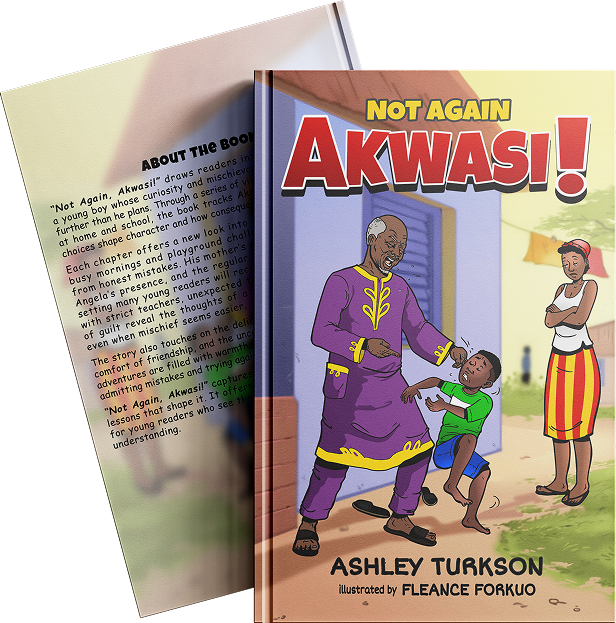
Not Again, Akwasi! is a character-driven children’s story built around consequences, accountability, and growth. Akwasi’s trouble begins at home and follows him to school, where a failed math quiz and confrontation with Mr. Quaye explode into a serious act of defiance. Instead of learning quietly, Akwasi grabs the cane, earning himself an apology book and a forced apology. When his mother entrusts him with Angela’s school fees, Akwasi forgets, then lies. Watching his teacher panic, sweat, and eventually lose most of his pay forces Akwasi to confront the real damage his choices can cause. The story then shifts home, where Aunty Erica’s visit sparks more mischief, leading to a dangerous kitchen injury. Akwasi’s fierce protection of Angela shows his heart, even as his actions earn him lashes and weeks of sweeping punishment. Ironically, sweeping the yard of Mr. Appiah, the neighbor he once stole from, becomes a turning point, as Akwasi learns practical skills and humility. The final chapters bring stubbornness to a peak when Akwasi locks Uncle Tsei outside for hours, forcing a public apology and family reckoning. Through humor, discipline, and emotional honesty, the book shows that growing up isn’t about avoiding punishment, it’s about learning when to stop, speak truth, and take responsibility.
Why Read It?
NOT AGAIN
AKWASI
Not Again, Akwasi! is ideal for readers who enjoy humor paired with meaningful lessons. Children will recognize Akwasi’s stubbornness, curiosity, and quick thinking, while adults will appreciate how the story handles discipline realistically. The book shows how small choices: lying, teasing, refusing to listen, can grow into serious consequences that affect others. At the same time, it highlights empathy, especially through Akwasi’s protection of his sister and his eventual guilt over harming his teacher. Each chapter creates natural moments for discussion about honesty, respect, anger, and responsibility. The story does not excuse bad behavior, but it also doesn’t remove compassion. Instead, it presents growth as a process shaped by reflection and accountability. Perfect for classrooms, family reading, or independent readers, this book helps children understand that mistakes don’t define them, but how they respond afterward does.